


The platform is lowering the cost of laboratory digitalization while expanding patient booking, preventive health services, QR-verified results and diaspora-supported care.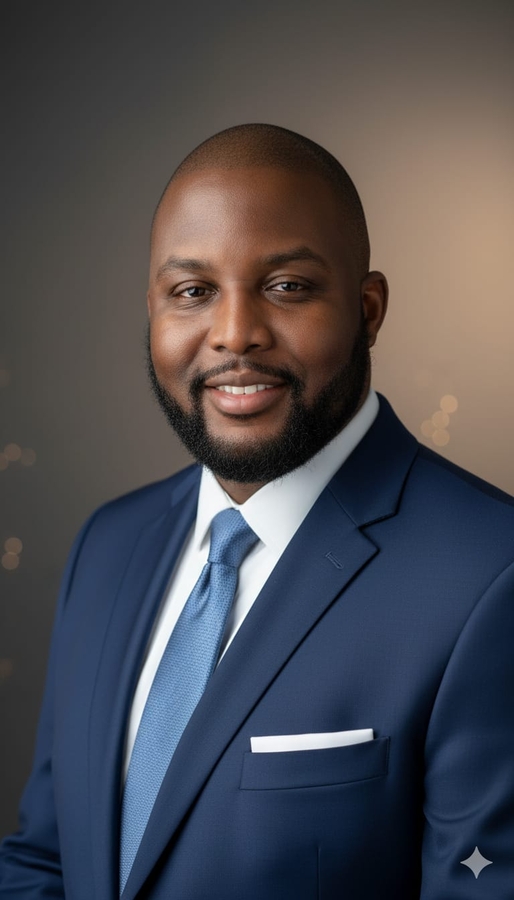
BRANDYWINE, MD, September 15, 2026 /24-7PressRelease/ -- One of Africa's biggest health-care opportunities is hiding in plain sight: the thousands of diagnostic laboratories that sit between patients and many of the decisions that determine what happens next in their care. A doctor may suspect diabetes, kidney disease, an infection or anemia, but in many cases it is laboratory testing that helps turn suspicion into action. Yet across much of the continent, laboratories still operate as separate islands. A patient can be tested in one facility today and arrive at another hospital tomorrow with little more than a printed report or a PDF on a phone. The second provider may have no relationship with the first laboratory, no simple way to confirm the result and, in some cases, may order the test again. At the same time, thousands of smaller laboratories remain outside modern digital systems because the cost of traditional software does not fit the economics of their businesses. For families abroad trying to care for parents and relatives back home, even arranging a routine health check can still mean sending money and hoping the right care is eventually provided. This is the gap we are trying to close with MyLabScope, beginning with 55 connected laboratories in Nigeria and a model we believe can grow far beyond it.
Nigeria is an important place to start because it brings many of Africa's health-care contradictions into one country. It has major teaching hospitals, federal and state hospitals, private hospital groups, independent clinics and thousands of diagnostic providers. It also has millions of patients who move among those institutions depending on cost, urgency, availability and trust.
Public hospitals carry enormous demand and can be affected by long queues, limited capacity, staff shortages and periods of industrial action. People who can afford private care often turn to it for convenience, but private treatment can be expensive and quality varies widely. A patient may begin in a government hospital, see a private doctor later, complete laboratory testing somewhere else and eventually seek treatment at another facility. The patient moves through the system; the information often does not.
Electronic medical records are an important part of solving this problem, and more hospitals are adopting them. But an electronic record inside one hospital does not automatically create a connected health system. It may improve what happens within the walls of that institution while doing little to connect the independent laboratory down the road.
MyLabScope is not an electronic medical record system, and we are not trying to replace one. We are building around laboratory information because diagnostics is one of the clearest places where fragmentation becomes visible and one of the most practical places to begin connecting care.
The fact that laboratory software already exists is not lost on us. There are laboratory information systems operating in Nigeria and elsewhere in Africa today. The problem is not the absence of software; it is who can realistically afford to use it and what happens after it is installed.
Many products rely on fixed monthly or annual subscriptions, and those costs can be difficult for smaller laboratories to carry. A large diagnostic chain may consider a recurring software bill a routine business expense. A neighborhood laboratory seeing a relatively small number of patients each day has to make a very different calculation. When technology becomes another large fixed cost, the laboratory may continue with paper, spreadsheets or disconnected tools even when the owner understands the value of going digital.
That is why we chose a pay-as-you-go model for MyLabScope. A laboratory should not have to make a large technology investment before it can participate in digital health. Its cost should grow as its use of the platform grows. That allows smaller laboratories to register patients, manage investigations, generate professional reports, deliver results directly to patients and see useful information about their activity without taking on the kind of infrastructure burden traditionally associated with enterprise software.
For us, pay-as-you-go is not simply a pricing strategy. It is how we make the network possible. If the cost of entry excludes thousands of smaller laboratories, then any attempt to build a broad diagnostic network will be limited from the beginning.
This matters because the real ambition of MyLabScope is not to accumulate software subscribers. It is to create a network of laboratories that patients can actually use. Today, 55 laboratories in Nigeria are connected to the platform. That is an early number in a very large market, and Nigeria remains our pilot. We are learning from laboratories operating under different conditions and using those lessons to improve the platform.
But the value of connecting a laboratory changes once we begin thinking beyond its internal operations. A laboratory that has gone digital can become part of a larger system through which patients can discover services, book appointments and receive results, rather than remaining an isolated business that happens to use software.
That patient side is important because health care should not begin only when someone becomes seriously ill. A person should be able to search for participating laboratories nearby and book an annual health check, a men's or women's health package, diabetes screening, cardiovascular testing or another preventive service. Parents may need school-entry tests. Employers may need pre-employment screening. Families may want routine testing for an aging parent.
These are ordinary health needs, yet arranging them can still involve asking around for a laboratory, making phone calls, visiting in person and trying to determine what services are available. A connected laboratory network can make preventive testing easier to find and easier to arrange.
The opportunity becomes even more interesting when we consider the African diaspora. Millions of Africans living in the United States, Canada, Britain, Europe and other parts of the world already help pay for health care at home. A daughter in Toronto may send money to her mother in Lagos for laboratory testing. A son in Maryland may want his father in Abuja to complete an annual health screening. A family in London may be trying to coordinate care for an older relative from thousands of miles away.
The traditional solution is to send money and then depend on family members to find the provider, make the appointment and complete the testing.
We believe families should have another option. Through the MyLabScope patient platform, our goal is to allow someone abroad to find a participating laboratory near a loved one, choose a laboratory service or health package, book it and pay for it directly. Instead of only remitting money for health care, a family member can arrange the health-care service itself.
That gives the person paying greater clarity about what has been purchased, gives the patient a defined place to receive the service and gives local laboratories access to demand that may otherwise never reach them. Africa has spent years transforming how money moves between the continent and its diaspora. There is an opportunity to apply the same imagination to how families coordinate health care.
The laboratory result itself is only part of this story. MyLabScope generates digital laboratory reports, including PDFs, just as many laboratories already do. What matters is what surrounds that result.
Patients can receive their results directly, and MyLabScope also supports QR-based result verification, giving a receiving party a simple way to confirm that a report originated from the laboratory that issued it. That becomes especially important in a fragmented health system, where a patient may carry a result from one facility to another and the receiving provider may have no prior relationship with the laboratory that performed the test.
The goal is not to make the PDF itself innovative; it is to make the result easier to deliver, easier to verify and more useful to the patient beyond the walls of the laboratory where it was produced.
Connecting different parts of the health system is also part of what we are working toward, but meaningful integration needs a strong foundation. Hospitals will continue to use different electronic medical record systems, laboratories will use different laboratory systems, and insurers, pharmacies and other health businesses will have their own technology. The answer is not to force every provider onto one platform, but to make it possible for those systems to work together.
In banking, two institutions do not need identical internal software for a customer to transfer money between them; health care should ultimately work on the same principle. For MyLabScope, the first step is building the laboratory foundation: helping laboratories come online affordably, connecting them to patients, making results easier to deliver and verify, and growing a trusted network of diagnostic providers.
We are also working toward the integrations that can eventually allow that network to connect more easily with hospitals and the wider health system. The foundation has to come first, because without connected laboratories underneath it, there is very little to integrate.
For Nigeria, this creates an opportunity that extends beyond private laboratories. Federal and state hospitals, teaching hospitals and ministries of health are already dealing with the consequences of large patient volumes and fragmented care. MyLabScope cannot create hospital beds, resolve workforce shortages or solve every challenge facing public health institutions.
What we can contribute is a practical way to think about the diagnostic layer. If smaller independent laboratories can become digitally connected at low cost, they do not have to remain invisible to the wider health system. Over time, governments, hospitals and insurers can explore ways of working with these networks rather than treating every laboratory as a separate island.
There is also a business argument here that deserves attention. Africa's digital health market will not reach its potential if technology companies build only for the largest hospitals and wealthiest customers. There is a much larger market in helping smaller providers participate economically.
A pay-as-you-go model lowers the barrier for the laboratory. A patient marketplace can help that laboratory attract business. Preventive health packages create new reasons for patients to engage before they become sick. Diaspora bookings create a new route for health spending to reach actual services.
As more laboratories join, the network becomes more useful to patients; as more patients use it, participation becomes more valuable to laboratories. That is the kind of cycle that can turn a piece of software into infrastructure.
Nigeria is where we are proving this model, but the underlying conditions are not unique to Nigeria. Across Africa, modern hospitals in major cities exist alongside small clinics and independent laboratories with limited digital tools. Countries differ, regulations differ and health systems differ, so expansion cannot simply mean copying and pasting one Nigerian product across a continent.
But the broader questions are remarkably familiar: How do we make digital health affordable for smaller providers? How do we help patients find reliable diagnostic services? How do we make preventive testing easier? How do we connect Africans abroad more directly to care for their families? And how do we make health information more useful when patients inevitably move between providers?
MyLabScope is still early in answering those questions. Fifty-five connected laboratories is a beginning, not a victory lap. But it is enough to show us that there is demand for a different model and enough to begin inviting others into the conversation.
We want to work with laboratories that need an affordable path to becoming digital, hospitals that want better connections with diagnostic providers, health insurers and HMOs that want clearer laboratory networks, employers that need screening services, universities and development organizations working on health access, governments thinking about how smaller providers fit into national digital health plans, diaspora organizations that want better ways to support families at home, and investors and technology partners who see the opportunity in building the connective layer of African health care.
Africa's next health-care breakthrough may not come from building another enormous hospital system or another expensive piece of software. It may come from making the thousands of providers already caring for people easier to find, easier to use and easier to connect.
For MyLabScope, the laboratory is where that work begins. Nigeria is where we are proving it. The larger opportunity is to build a diagnostic network capable of connecting patients, families and health institutions across Africa rather than leaving each of them to solve the same problem alone.
Olayinka Ayeni is the founder of MyLabScope, a pay-as-you-go laboratory information and diagnostic network platform being piloted in Nigeria. MyLabScope is open to collaboration with laboratories, hospitals, governments, insurers, employers, development organizations, diaspora groups, technology partners and investors. Learn more at MyLabScope.com. For partnership inquiries: [email protected]. To contact the founder directly: [email protected].
Read the original story here: https://www.24-7pressrelease.com/press-release/538587/mylabscope-reaches-55-laboratories-in-nigeria-pilot-as-it-builds-a-pay-as-you-go-diagnostic-network-for-africa
Press Release Service and Press Release Distribution by 24-7 Press Release Newswire
MyLabScope Reaches 55 Laboratories in Nigeria Pilot as It Builds a Pay-as-You-Go Diagnostic Network for Africa
Sep 15, 2026
Looking for Local Media Coverage in the United States of America?
We have a place for all at the

What's Hot

BusinessSep 4, 2026
Records reveal safety complaints, poor maintenance at site of deadly Washington pulp mill disaster
SportsSep 6, 2026
Sounders' Andrew Thomas, Red Bulls' Ethan Horvath duel to 0-0 draw

More News

General newsSep 3, 2026
Teenager arrested and 5 others sought in deadly July 4 fire in Washington state
General newsAug 29, 2026
Fire's Haile-Selassie, Lewandowski score to spoil 2-goal debut of Sounders' Joveljić in 2-2 draw
Press Releases
From Debt to Warmth: How FREEHILL's Founder Turned Rock Bott...
As Surprise Plans for Thousands of New Homes, Local Plumber ...
DeliverMyMotor Introduces Route-Based Car Transport Pricing ...
Peter Grimyser Commits to a Public Challenge: 27 Days of Saf...
New Study on Sofwave's Pure Impact Adds to a Growing Case fo...

Is Your Customer.
Publish news of your business, community or major event to get local media coverage and reach local audiences who really care.


