


Four decades-long research explores whether biochemical variations in menstrual cycles may influence conception outcomes and offer new directions for family planning.
ATLANTA, GA, Oct 19, 2026 — Reproductive biology research by Dr. Kuldeep Verma, whose four decades-long investigations explore a possible relationship between menstrual-cycle biochemical conditions and conception outcomes, has surprisingly discovered the other half side of reproduction. His work forms the basis of the Alternating Phase Method for Family Balancing, a research hypothesis examining whether variations in the female reproductive environment may influence fertilization and the sex of offspring.
Dr. Verma’s scientific journey began with an invention for which he received a presidential award in 1976. Back then, he had a notion that just like men have two kinds of sperm, women must also have something two kinds of. He didn’t know what to look for and what method to use. He subsequently began examining urine samples before pregnancy for random parameters with the support from two local maternity hospitals. His early work in 1982 included developing a first urine based post-conception fetal-sex prediction method, followed by investigations into whether measurable biological conditions before pregnancy might be different.
While pursuing his doctoral studies, Dr. Verma continued analyzing urine samples collected before pregnancy. His first excitement came in 2006, when he observed and established that women’s menstrual cycles exhibit alternating biochemical characteristics. By 2008, his observations led him to propose an association between these characteristics and the sex of children subsequently conceived. By 2025, after studying nearly 8000 preconception samples, he firmly realized that the uterus has a powerful role in natural gender selection.
The Alternating Phase Method
Dr. Verma’s research proposes that menstrual cycles create alternating oxidizing and reducing biochemical environments in the uterus for life and that in one cycle that environment is maintained for the whole cycle from start to finish, potentially influencing sperm selection therein.
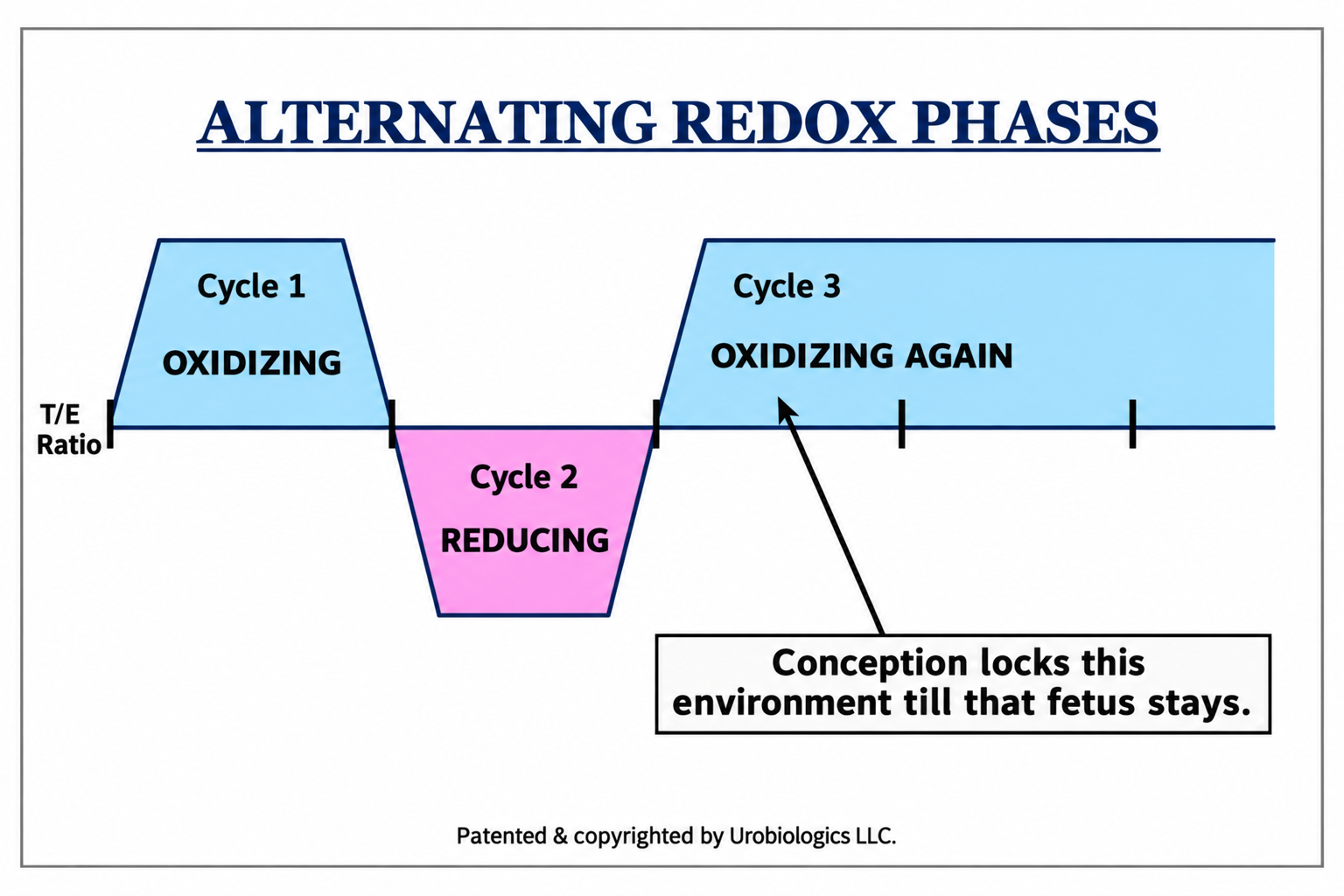
His hypothesis suggests that these redox conditions could affect the behavior or selection of X- and Y chromosome-bearing sperm before fertilization. This phenomenon appears to be genetically controlled and cannot be influenced by any diets or ectopic chemical treatments.
The approach is better than that proposed by Dr. Shettles who postulated that the sperms behave differently few hours before or after ovulation. This idea kept millions of women on edge with no significant outcomes. Dr. Shettles hypothesis was later debunked by NIH (https://www.ncbi.nlm.nih.gov/pmc/articles/PMC1440662/).
Dr. Verma’s concept challenges conventional assumptions about whether the female reproductive environment may contribute to differences in conception outcomes. However, the proposed existence of consistently alternating boy-conceiving and girl-conceiving cycles and/or its ability to predict or influence the sex of offspring is remarkable but needs to be independently established through large-scale clinical validation and Dr. Verma is confidently willing to collaborate. He has, in fact, automated the method to study even 500 samples a day
As part of this investigation, PreGender test has been developed where at least three midcycle urine samples are mailed to Urobiologics to clearly understand the alternating biochemical characteristics and thereafter couples are guided for family planning with high confidence.
An example to show how this concept works:
Customer’s name = ABC (was trying to conceive a girl. submitted 3 mid-cycle urine samples).
The first sample collected on 4/14/26 showed oxidizing env (a boy phase),
The second sample collected on 5/10/26 showed reducing env (a girl phase).
The third sample collected on 6/3/26 showed oxidizing env again (a boy phase).
Period start date 6/16/26, reducing environment started, conceived.
The FirstGender test on 7/3/26 reports a female fetus. Ultrasound scan on 10/15/26 confirmed a girl. No diet or medicine was given.
This has led to creation of a logo “BridgeToBaby”
Exploring Potential Applications in Fertility Research
Dr. Verma believes that studying reproductive redox conditions may provide additional insights into fertilization and assisted reproductive technologies, including in vitro fertilization (IVF) and intrauterine insemination (IUI). His research considers whether biochemical interactions between reproductive cells (sperms and eggs) and their surrounding environment could contribute to a better understanding of fertilization outcomes.
While the hypothesis suggests potential avenues for investigation, Dr. Verma believes that evaluating the alternating redox environment before egg extraction, embryo development and implantation is the only way for improving IVF or IUI success rates. Currently IVF / IUI clinics do not perform such studies and has consistently stayed at lower than 35% success rate in spite of huge investments in laboratory equipment and personnel.
Any clinical or commercial application would require controlled studies, independent replication and appropriate scientific and regulatory evaluation.
Research Collaboration and Future Direction
Dr. Verma acknowledges the advisory contributions of Sumeet Verma, M.D.; Manisha Verma, MPH, CPA; Amit Bhatnagar, CPA; and Michael Hynes, M.D. in supporting the development of his research.
It is a reproductive biology research initiative by Dr. Kuldeep Verma. Its research focuses on the proposed relationship between menstrual-cycle biochemical conditions, oxidation-reduction environments and conception outcomes.
The organization’s work includes the Alternating Phase Method and PreGender concept, which are being explored for their potential relevance to fertility research and animal reproduction. The proposed concepts may also warrant further investigation in animal reproduction, particularly horse and cattle breeding, where understanding reproductive conditions could have practical applications. Even the egg donation and preservation service must consider this aspect. The work on maternal-fetal research need to consider the Alternating redox phases and complex questions can be answered.
Advance Family planning and population control: Some couples have multiple babies of same gender. It is simply because they get easily conceived in one phase only. This discovery is the only one to offers a practical approach to family balancing without visiting any clinic and without any medical treatment. A new trend has been introduced: If a would-be-bride gets three urine samples tested from Urobiologics, she can practically “control to have” a small and balanced family of one-boy and one girl. This avoids guess work, blame game, domestic abuse and helps in population control.
Dr. Verma is inviting investors, research scientists especially in the field of in-vitro fertilization to collaborate and launch a new franchise in IVF / IUI.
Additional information about Dr. Verma’s work is available at his website.
Media Contact
Dr. Kuldeep Verma
CEO, Urobiologics LLC
Website: https://www.urobiologics.com
Email: [email protected]; [email protected]
Toll Free: 1-877 HE-OR-SHE (1 877 43 677 43); WhatsApp +1 3135747500






